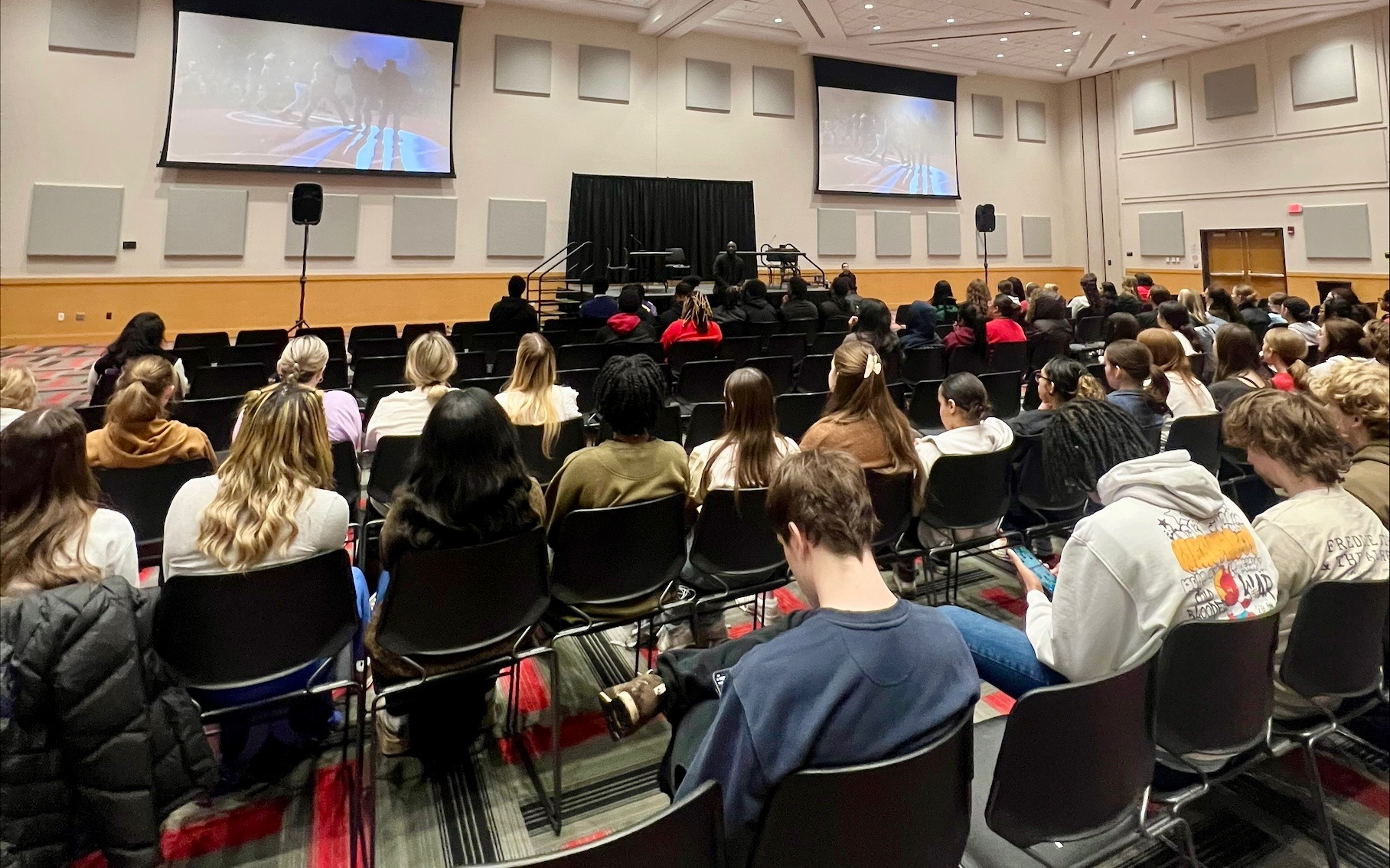
PRESENTATION: The Trial of Hazing: A Campus Courtroom Experience
What if you could step inside a simulated courtroom to better understand how a hazing tragedy can unfold — and how it can be prevented? The Trial of Hazing is an interactive, educational program designed to help students explore the ethical, leadership, and decision-making failures that can lead to hazing-related harm. Rather than observing from the sidelines, participants actively engage in a hypothetical, mock courtroom simulation based on widely reported public scenarios. The program is facilitated by Derwin L. Webb, Esq., a first-generation attorney and former Division I basketball player, who guides participants through the structure and process of a simulated trial for educational purposes only. PROGRAM FORMAT Participants are randomly assigned roles commonly found in a courtroom setting, including:
- Prosecutor
- Defense attorney
- Organization members
- University administrators
- Family representatives
- Law enforcement
- Jurors Through this structured simulation, participants engage in:
- Opening statements
- Witness testimony
- Closing arguments All decisions and outcomes are determined solely by the participants as part of the learning experience . LEARNING EXPERIENCE The program concludes with a guided debrief focused on:
- Lessons learned from the simulation
- How breakdowns in leadership and accountability can escalate harm
- The importance of intervention, ethical decision-making, and personal responsibility
- Practical strategies to reduce risk and prevent future tragedies This is not a lecture. It is an immersive educational experience designed to encourage reflection, discussion, and responsible leadership. LEARNING OBJECTIVES
- Understand the Ethical and Legal Consequences of Hazing At a high level, participants examine how hazing behavior can result in serious consequences, including criminal exposure, civil liability, organizational sanctions, and long-term personal and institutional harm. The discussion emphasizes general legal principles and ethical considerations rather than specific cases or legal advice.
- Build Empathy and Perspective-Taking Participants are encouraged to consider the experiences and perspectives of all individuals impacted by hazing-related incidents — including families, peers, organizational leaders, and institutions — and to recognize how decisions made under pressure can have far-reaching effects.
- Apply Leadership and Bystander Intervention Principles Participants identify critical moments where ethical leadership, accountability, or intervention could have altered outcomes. Emphasis is placed on personal responsibility, courage, and proactive decision-making. IMPORTANT NOTICE This program is educational in nature and uses hypothetical scenarios for instructional purposes only. Any views expressed are personal and do not reflect the views of the Kentucky judiciary or any court. This program does not provide legal advice and does not address any pending or actual cases. WHY THIS MATTERS Hazing tragedies do not begin with catastrophic decisions — they often start with small choices, silence, or inaction. This experience challenges participants to examine those moments and to consider what ethical leadership requires before harm occurs.